Virtual Hospice Finance Directors Group
This group offers FDs the chance to hear from expert speakers, share approaches and policies and benchmark financial performance.

Hospice finance directors carry deep responsibility, overseeing sustainability, compliance, and reserves — all under tightening margins and evolving sector expectations.
The Virtual Hospice FD Group brings together finance leaders from hospices for quarterly, expert-led sessions where challenges can be discussed openly.
You’ll share approaches, benchmark performance, and dig into the pressing fiscal issues the sector faces.
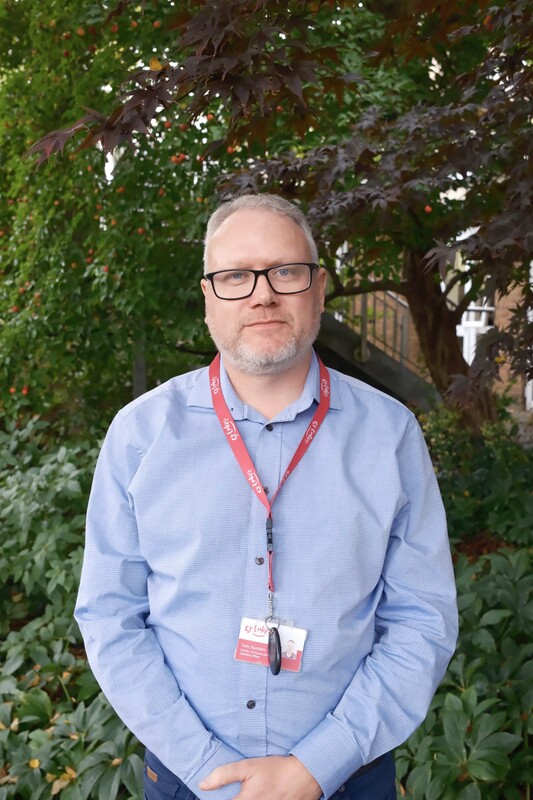
Tony Saunders, right, Director of Finance & COO at St Luke's in Sheffield has been a member for several years.
Being a member of the group gives me access to peer insight, practical tools, and sector-specific advice I can easily implement. It’s a space where hospice Finance Directors can share challenges and opportunities openly and get great advice and solutions.
Because the group is sector-focused, each conversation is sharp, relevant, and immediately usable. You’ll gain insight, reassurance, and new strategies to strengthen your hospice’s financial footing. Join if you want:
• A safe professional peer network for your unique role
• Benchmarking and comparative insight to test your assumptions
• Expert input on regulation, risk, reserves, and growth
• A sounding board for big financial decisions and challenges
Details on recent sessions can be seen below. Membership of the group is £220 plus VAT per session. To learn more about the group, contact us via the following form.
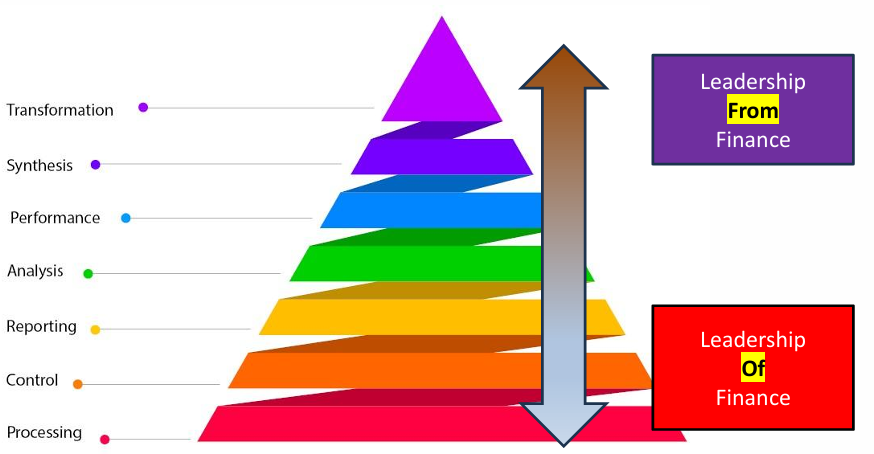
The traditional view of finance is a back-office support function: processing, control and reporting. Necessary — but internally focused; supportive not strategic.
Simon Hopkins introduced the Finance Journey, a framework he developed but now owned by the Charity Finance Group. This maps seven stages, from Processing through Control, Reporting, Analysis, Performance and Synthesis to Transformation. The pivot point is the move from leadership of finance to leadership from finance.
Peter Knight described putting it into practice at the Varkey Foundation. Global finance managers assessed themselves against the model, agreed they were operating at the Performance level, and built personal development plans from there.
Group members then shared where their own organisations are on the framework. What came across was just how consistent their experiences were, with lots of discussion around needing to build the foundations before getting to the more strategic levels.
Commonality also in some of the barriers around culture and siloed systems - and the need to convince their own teams, not just others. One participant talked of trying to move perception of finance from being a controller of others to an enabler of others.
But there was also consistency in the belief that FDs can and should play a strategic role both within their hospices and without in discussions with commissioners, funders and other stakeholders.

The hospice sector is currently facing the largest financial crisis in its history. Every week we seem to hear of another hospice having to announce cuts to its services, whilst projections show that the cumulative loss across all services for 2025/26 will be the largest on record. So, returning to this theme was timely and relevant.
Tony Saunders from St Luke's Hospice explained how they have moved towards a sustainable future through judicious cutting of expenditure and increasing income, including securing long-term statutory funding. But, as with all hospices, how the vagaries of legacy income can still cause short-term shocks - both good and bad.
We also discussed some of the newer strategies such as diversifying into commercial income activities, whilst recognising that these are far from a quick panacea. Moreover, those related to core purpose - such as paid for bereavement services or respite care - can run into cultural resistance
The underlying message in the Stockdale Paradox comes to mind. Never underestimate the challenge ahead, but never lose faith in your ability to overcome it.

Sabrina — Director of The Risk Collaborative — gave us a fresh and provocative approach to risk management.
Her central argument is that traditional tools such as risk registers and heat maps encourage a static, compliance-driven view of risk, disconnected from strategic objectives.
The alternative — objective-centred risk management — starts from what an organisation is actually trying to achieve, and asks what needs to be true for those objectives to succeed.
Sabrina introduced the concept of organisational fragility, identifying four key vulnerability areas: cost structure, operating model, reputation and trust, and governance.
Addressing fragility means redesigning structural weaknesses, building practical buffers and distinguishing between risks that can be mitigated (controllable) and those that simply need to be monitored (uncontrollable).
Crucially, each preparation element is costed, turning risk analysis into a tool for resource allocation and a compelling basis for funding conversations with trustees and supporters.
This process makes managing uncertainty more rooted in reality; a dynamic, invigorating exercise, not a dry, academic approach undertaken in boardrooms well away from the frontline.

Andrew Roberts, Associate Director at RSM, took the group through the changes flowing from the FRS102 periodic review and the revised SORP.
The headline is the new single lease model, which brings most leases onto the balance sheet, with exemptions only for low-value assets and short-term leases. One consequence is that net current assets can look worse without anything having actually changed.
Andrew also unpicked the five-step revenue recognition model and where it gets awkward for charities — bundled services such as training and equipment provision, below-market rents treated as non-exchange transactions, and legacy income where estate complications may defer recognition. His practical advice was refreshingly clear. Assess the impact now, particularly on leases and income recognition. Keep boards, lenders and auditors informed. And check your finance systems can produce what you will need, making any changes before April 2026.
The session also covered pension governance, members' experiences of new finance systems, and our benchmarking of audit costs across ten hospices — where difficulty finding auditors willing to work in the charity sector proved a common theme.

In difficult times, it’s natural to focus on the ‘mattress’ role of reserves — providing assurance when the world outside is challenging. That may explain the historic on ‘months of expenditure’ as the default measure.
But this metric can give a false sense of prudence, masking the real questions about risk, liquidity, and adaptability that should sit at the heart of a reserves strategy.
Our September session involved some really interesting discussion around the strategic purpose of reserves, how to ascertain the ‘right’ level to have and in what form they should be held. Here are a few findings.
𝗧𝗵𝗲 𝗽𝗿𝗼𝗯𝗹𝗲𝗺 𝘄𝗶𝘁𝗵 𝘁𝗵𝗲 ‘𝗺𝗼𝗻𝘁𝗵𝘀 𝗼𝗳’ 𝗮𝗽𝗽𝗿𝗼𝗮𝗰𝗵:
❎ A flat “x months of total costs” doesn’t distinguish between core delivery and more discretionary projects. It assumes you’ll continue spending evenly across the board.
❎ Crises never arrive as a uniform fall in all income streams. They tend to be jagged: some revenue lines drop suddenly, others hold steady, or even increase.
❎ It confuses liquidity with security — assets that can’t be realised quickly are of limited use when cash is tight.
❎ It focuses on an absolute number, not the complex financial dynamics behind it.
❎ Reserves should be used to strengthen resilience.
In challenging times, there may still be opportunities to invest in income generation to forge a better future.
𝗔 𝗯𝗲𝘁𝘁𝗲𝗿 𝘄𝗮𝘆 𝗳𝗼𝗿𝘄𝗮𝗿𝗱:
✅ Start with risk scenarios, not ratios – model the realistic shocks your organisation could face. Base your requirement on that analysis, not a multiple of monthly spend.
✅ Segment reserves by liquidity – what’s available immediately vs. medium-term vs. designated.
✅ Set ranges, not fixed targets – focus on trend and rationale, not a single figure.
✅ Integrate reserves into strategy – use them to enable agility, not just survival.
Reserves aren’t just a mattress to fall back on. They’re a springboard to help your organisation adapt, invest and stay mission-ready — even in turbulent times.
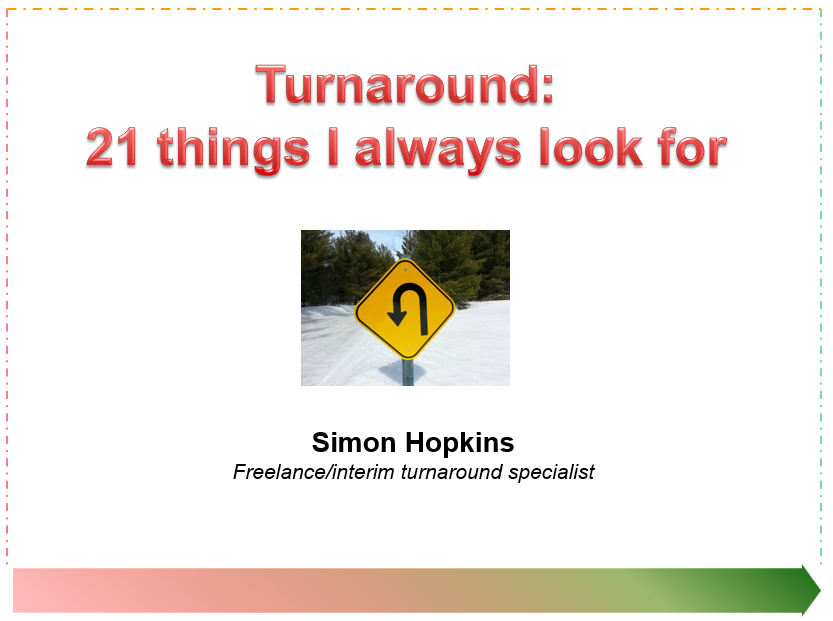
This was one of the most thought provoking ever sessions of the group, as expert Simon Hopkins talked us through the 21 things he looks for when approaching a charity turnaround situation.
Simon made so many incisive insights and pointers, many of which were around culture, behaviours and ethics not just strategic financial skills. His argument that the challenges are invariably more complex and nuanced than in the corporate world certainly rang true with those on the call who have experience of working in both sectors.
There were countless others learning points from the importance of officially declaring that an organisation is in a turnaround status to open and honest communication with staff and other stakeholders.
As one participant said, much of this sounds like common sense when you hear it. But common sense is often not that common in such situations when you are under extreme pressure.
